The Dark Knight: The Sociology of Gotham and the Philosophy of Chaos
Reading The Dark Knight as an essay in social theory: Hobbes's collapsing Leviathan, Durkheim's anomie, the prisoner's dilemma on the ferries, the panopticon in the sonar machine and Plato's noble lie.
Spoiler warning: this post discusses the ending.
Introduction: The Society Under the Cape
The Dark Knight is an essay in social theory dressed up as a superhero film. In 2008 Christopher Nolan did not tell us about good triumphing over evil; he showed us how far a city’s moral limits can be pushed.
The year of its release was no accident. The shadow of 9/11 still hung over us; terror, surveillance and the question “how much freedom do we give up for security?” were part of everyday life. That same year the global financial crisis was shaking trust in institutions.
In this piece I treat Gotham as a laboratory. Along a line that runs from Hobbes to Durkheim and from Machiavelli to Foucault, I ask one question: what holds a society together, its laws, its fear, or the stories we choose to believe?
Gotham: The City Where Leviathan Collapsed
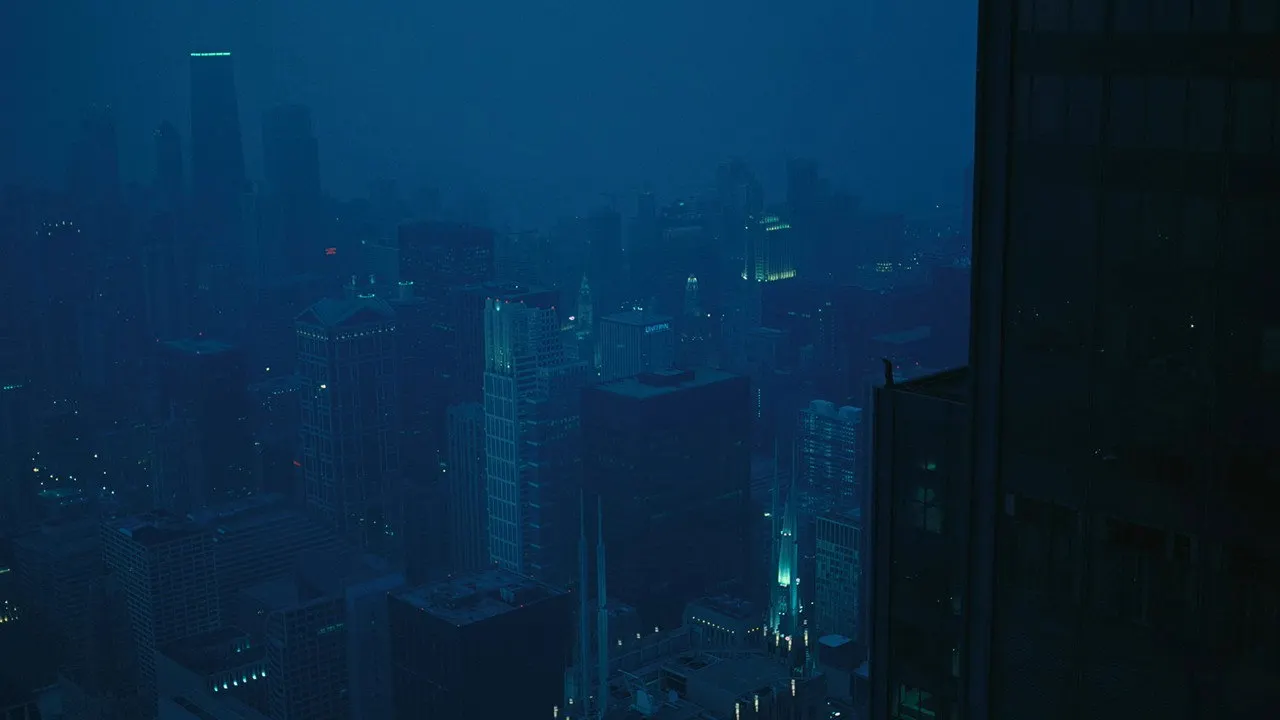
Gotham is dangerously close to what Thomas Hobbes called the “state of nature”. For Hobbes, without a strong sovereign people are wolves to one another, and life is “solitary, poor, nasty, brutish, and short”. So individuals hand part of their freedom to the state, the Leviathan, in exchange for protection.
In the Gotham of the opening scenes that contract is already broken. The police force is rotten with bribes, the courts sit in the mob’s shadow, and the mob’s money is safe in the banks. The Leviathan exists, but it has no teeth.
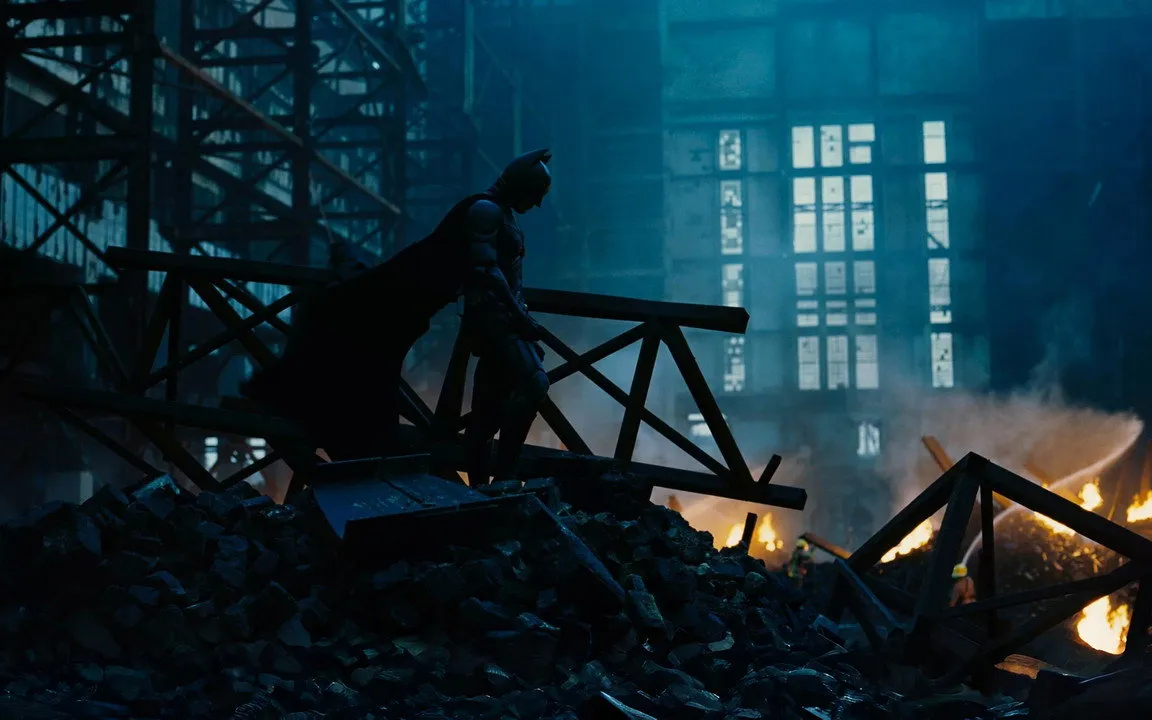
Batman is the product of exactly this vacuum. Max Weber defines the state as “a human community that successfully claims the monopoly of the legitimate use of physical force within a given territory”. Batman breaks that monopoly: he wields violence with no one’s authority. Gordon and Dent, by forming a secret alliance with him, admit the weakness of their own institution.
Here lies the film’s first big question: is the hero who appears when institutions collapse a cure or a symptom? The copycat Batmen and the rise of the Joker whisper that it is the latter. A vigilante, whether he likes it or not, summons vigilantes of his own.
The Joker: Anomie on Display
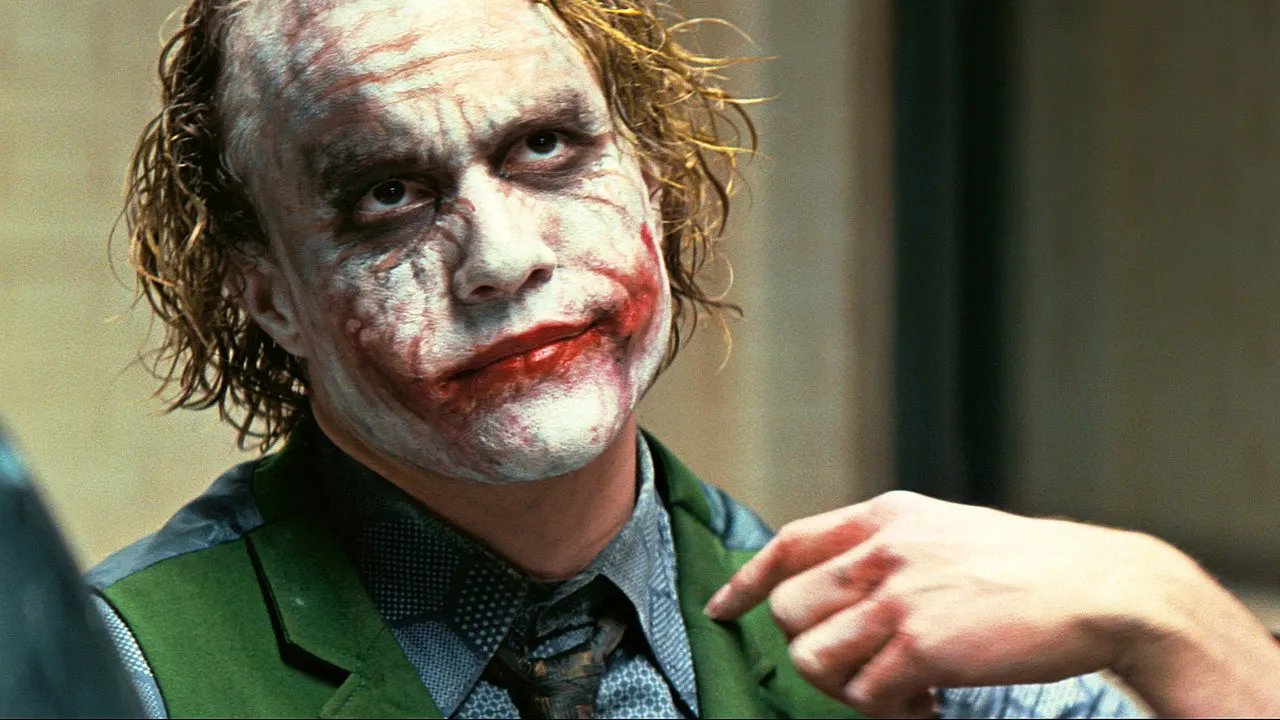
The Joker is a figure who diagnoses Gotham’s illness and deliberately makes it worse. He has no past; he tells the story of his scars differently every time. That alone is a message: identity and meaning are nothing more than the stories we make up.
Émile Durkheim calls the state in which the shared values and norms holding a society together dissolve anomie. In anomie people cannot tell what is right or what is possible; uncertainty takes the place of rules. The Joker is anomie in human form. The scene where he burns a mountain of cash is an insult to the most sacred norm of capitalist society: the value of money.
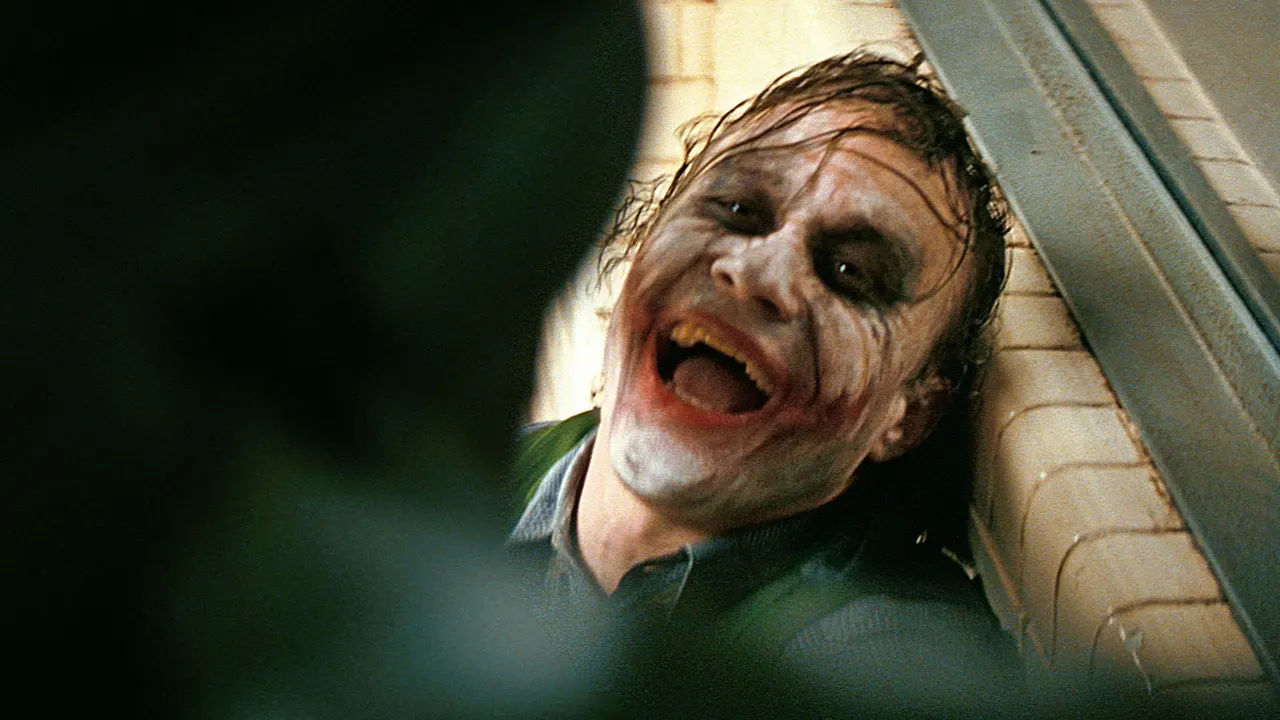
But above all the Joker is a “social experimenter”. For him civilisation is a thin varnish; when things go wrong, “civilised” people eat each other. It is the darkest reading of Hobbes’s thesis about human nature. His contempt for people with plans and schedules can also be read as a revolt against the “iron cage” of rationality in which, Weber said, modern society is trapped.
Nietzsche’s famous warning is decisive here: whoever fights monsters should see to it that he does not become a monster himself. The Joker’s aim is not to kill Batman but to force him to break his own rule, the rule against killing. The Joker does not fight to win; he fights to prove that his opponent is just like him.
One could also draw a kinship with Camus’s absurd, with an important difference. Camus defends revolt and solidarity even in a meaningless universe. The Joker draws nihilism from the same meaninglessness: if nothing means anything, chaos is the most honest order.
The Ferry Scene: Gotham’s Prisoner’s Dilemma
The film’s most sociological moment is the one in which no superhero intervenes. Two ferries, one full of ordinary citizens, the other full of prisoners. Each holds a detonator that can blow up the other, and the Joker’s rule is simple: if neither presses it by midnight, both die.
This is an almost textbook version of game theory’s prisoner’s dilemma. Rational self-interest says that whoever acts first survives. Hobbes’s man would press the button. The Joker counts on it.
But no one presses it. On the citizens’ ferry there is a vote and the majority favours detonating, yet no one dares to carry it out. On the prisoners’ ferry a hulking inmate throws the detonator out of the window. The scene is the film’s small but powerful nod to Rousseau’s intuition that human beings are good at heart.
What is sociologically striking is that the moral act comes not from the “respectable” class but from the group society has cast out. It is a reminder that social labels (criminal, citizen) do not explain people’s moral capacity. Howard Becker’s labelling theory asks exactly this: deviance lies not in the act but in the label stuck to it.
And perhaps most importantly, the scene shows that trust is not a rational calculation. The two boats cannot see or speak to each other; still, in the dark, each bets that the other side is human too. Perhaps that is exactly what we call society.
Harvey Dent: Fortuna’s Coin
Harvey Dent is the film’s true tragic hero. A hero without a mask, Gotham’s “white knight”: he promises to do in daylight and within the law what Batman does in the shadows. He is the rebuilding of the collapsed Leviathan.
Dent’s coin is a symbol from the start. In the first half both sides of the coin are the same: Dent rigs chance in his own favour and believes his fate is in his own hands. This is close to Machiavelli’s idea of virtù: the bold and resolute can rein in luck (fortuna).
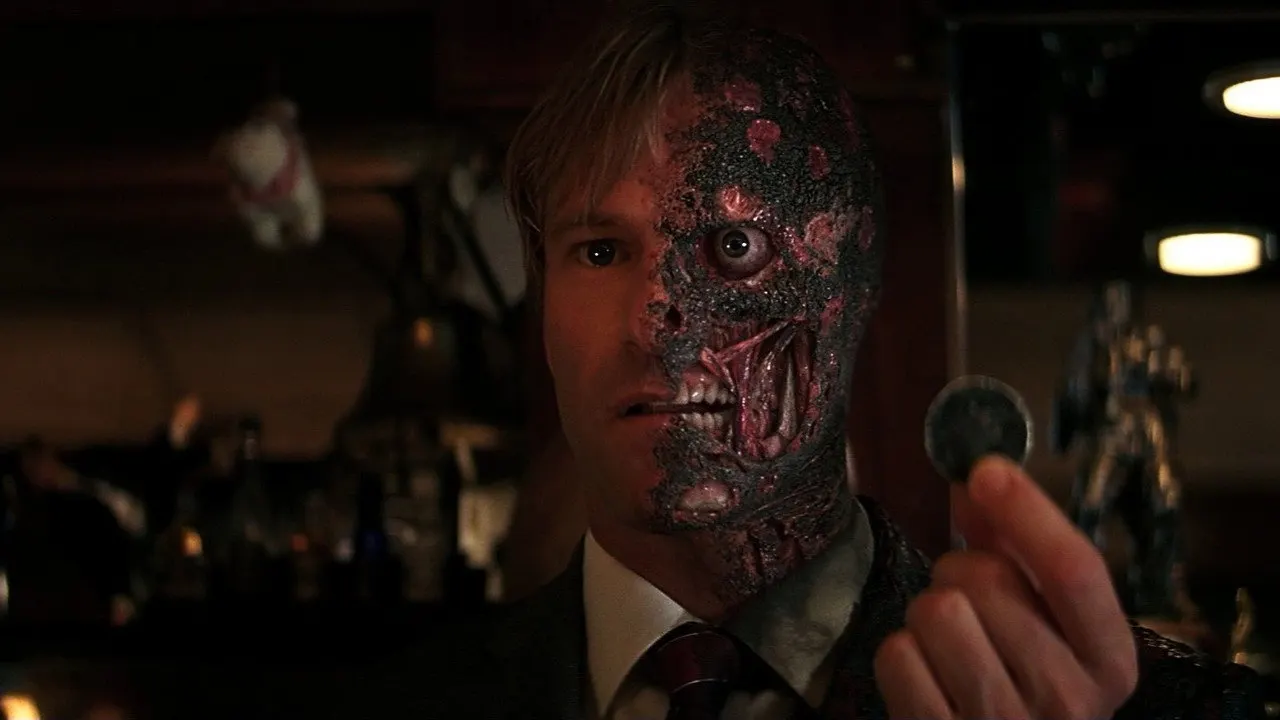
Rachel’s death and his burned face shatter that belief. One side of the coin is now scarred; he has truly surrendered to chance. For Two-Face, in a cruel world the only fair morality is chance, because chance is neutral, unbiased, and favours no one.
The irony runs deep. Rawls’s “veil of ignorance” proposes building a just society without knowing which position anyone will be born into. Two-Face confuses neutrality with justice: randomness looks like equality but is an escape from responsibility. The hand that flips the coin does not carry the weight of the decision.
Dent’s fall is the only successful proof of the Joker’s thesis. Wrong about the ferries, the Joker is right about Dent: one bad day is enough to drive even the best of us mad. Sociologically, this tells us that a society’s ideals are fragile when they rest on a single person.
The Sonar Machine: In the Shadow of the Panopticon
In the film’s final act Batman builds a machine that turns millions of mobile phones in Gotham into sonar devices and can watch the whole city. To find the Joker he becomes able to see every citizen’s conversations and movements. Lucius Fox finds this power “too much” and says he will resign once the machine has been used.
The scene is the digital-age counterpart of the panopticon Jeremy Bentham designed in the 18th century. The panopticon is a prison in which a single watcher at the centre can see every inmate, while the inmates can never know whether they are being watched. In Discipline and Punish Michel Foucault makes this model a metaphor for modern society: power no longer works by punishing bodies but by making them visible.
In the context of 2008 the scene is an open reference. In post-9/11 America, the Patriot Act and the warrantless wiretapping debates had put the question “is it legitimate to watch everyone in order to stop terror?” on the agenda. The film does not give a clear answer, but it draws a line: the machine is used once and then destroyed.
Batman’s choice matters. He takes emergency powers but does not make them permanent. Giorgio Agamben argues that modern states turn the “state of exception” into a permanent technique of government. The film suggests that surveillance power can be legitimate only while it remains temporary; the moment it becomes permanent, it is as dangerous as the chaos the Joker promises.
In today’s world, an age in which our data is collected constantly and algorithms know us better than Batman’s sonar screen ever could, the scene is far more disturbing than it was in 2008. No one destroyed our machine.
The Noble Lie: Birth of the Dark Knight
The film ends with a lie. The murders Dent committed are pinned on Batman; Gotham goes on believing its “white knight” stayed spotless. Gordon and Batman make the decision together, because if the truth came out, the criminals Dent sent to prison would go free and the city’s hope would collapse.
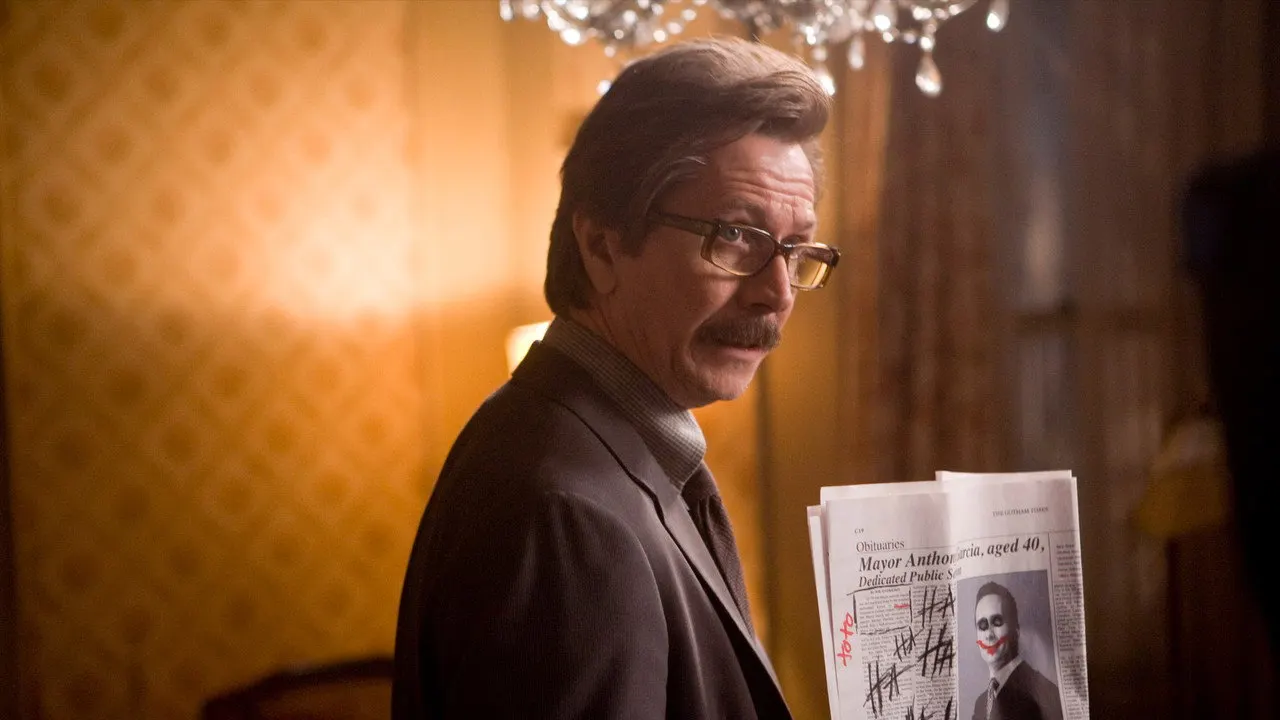
This is an almost literal application of the “noble lie” Plato proposes in the Republic. Plato argues that to preserve social harmony, rulers may tell the people a myth that is not true but is useful. Slavoj Žižek questioned exactly this point in his reading of the film, interpreting the ending as an uncomfortable defence of the idea that a lie is necessary for social order.
René Girard’s theory of the scapegoat shows the other side of the coin. For Girard, societies make peace by heaping their internal violence onto a victim; anger at a common enemy binds the community together again. Batman takes on this role knowingly. Rather than being Gotham’s saviour, he chooses to be its quarry.
This is where the name “Dark Knight” earns its meaning. The white knight is the hero the people want to believe in; the dark knight is the one who pays the price of that belief unseen. The film leaves us with a bitter question: if a society can only be built on a lie, on whose shoulders does its morality really rest?
Two readings are possible here. In the first, Batman is a true hero who sacrifices his personal reputation for the public good. In the second, he represents a paternalist elite that treats the public like a child who cannot handle the truth. To me, the film’s strength lies in leaving both readings open.
Conclusion: Gotham Is All Our Cities
The Dark Knight is a film about how fragile the compromise that holds a society together really is. When institutions rot, vigilante heroes are born; when vigilante heroes are born, villains who are their caricatures follow.
The film does not take sides between Hobbes and Rousseau, but it does place a bet. The ordinary people on the ferries prove the Joker wrong; Gotham’s brightest idealist proves him right. Perhaps the message is this: ordinary people are better than we think, but ideals we pile onto a single person are more fragile than we think.
When I come back to this film today, I find three questions still with us:
- Trust: When our faith in institutions is shaken, who or what fills the gap?
- Surveillance: Can we find the will to switch off the “sonar machines” we build in the name of security?
- Truth: Who pays the price of the stories told to keep the social peace?
Nolan does not give us an answer. But a superhero film that can ask these questions this seriously is, to me, one of the most important films not only of its time but of its genre.
Which sociological details in the film caught your attention? Let’s talk in the comments.
This English version was translated from the Turkish original with Claude.
Sources
- Wikipedia: The Dark Knight (credits, runtime and the noble lie debate in the themes section)accessed 14 November 2026
- Stanford Encyclopedia of Philosophy: Hobbes's Moral and Political Philosophyaccessed 14 November 2026
- Stanford Encyclopedia of Philosophy: Max Weberaccessed 14 November 2026
- TMDB: The Dark Knight (2008) stillsaccessed 14 November 2026